

International-Standard Process & Export for Panga (Basa) Fillets at OCEAN
A detailed account of the process, spanning from the inspection of semi-finished Pangasius (Basa) products at the factory to the neat loading of shipments into refrigerated containers for export to China on July 6, 2026.
At Ocean Company, every shipment of Pangasius (Basa) fillets undergoes a rigorous quality control and packaging process before being dispatched to international partners. Our dedication, precision, and professionalism at every stage serve as our commitment to product quality.
Below is the detailed process—from the inspection of semi-finished products at the factory to the loading of the shipment directly into refrigerated containers—for the export to China on June 7, 2026.

1. Check quality and classify categories.
Prior to packaging, Basa fillets undergo rigorous sensory inspection for color, fat trimming, and bone removal, followed by precise weighing using electronic scales.
Accurate sizing: Products are clearly sorted by size to meet specific customer requirements (e.g., 300–400g, 400–500g, etc.).
Hygiene assurance: The entire inspection process takes place on specialized sorting tables, with workers fully equipped with protective gear in compliance with HACCP/ISO standards.
2. Package Packing Process
Once the fish fillets meet quality standards, they are packed into specialized white cartons and securely strapped with high-strength plastic banding to prevent deformation during freezing and long-distance transport.
Each carton bears a clear label in English and Chinese, accurately indicating the size specification (e.g., a checkmark for the 400–500g size) to facilitate inventory counting and customs clearance.
3. Reefer Container Loading Process
Loading operations take place directly at the factory yard under the strict supervision of the QC and logistics coordination teams.
- Specialized vehicle fleet: Refrigerated container trucks and transfer trucks are staged and ready in the factory’s clean, spacious yard.
- Automated conveyor system: To optimize time and minimize temperature fluctuations, the company uses a conveyor system to transport cartons directly from the cold storage into the container.
- Professional loading team: Experienced personnel receive the goods from the conveyor and stack them neatly inside the container in accordance with technical specifications.
4. Container Stowage Process
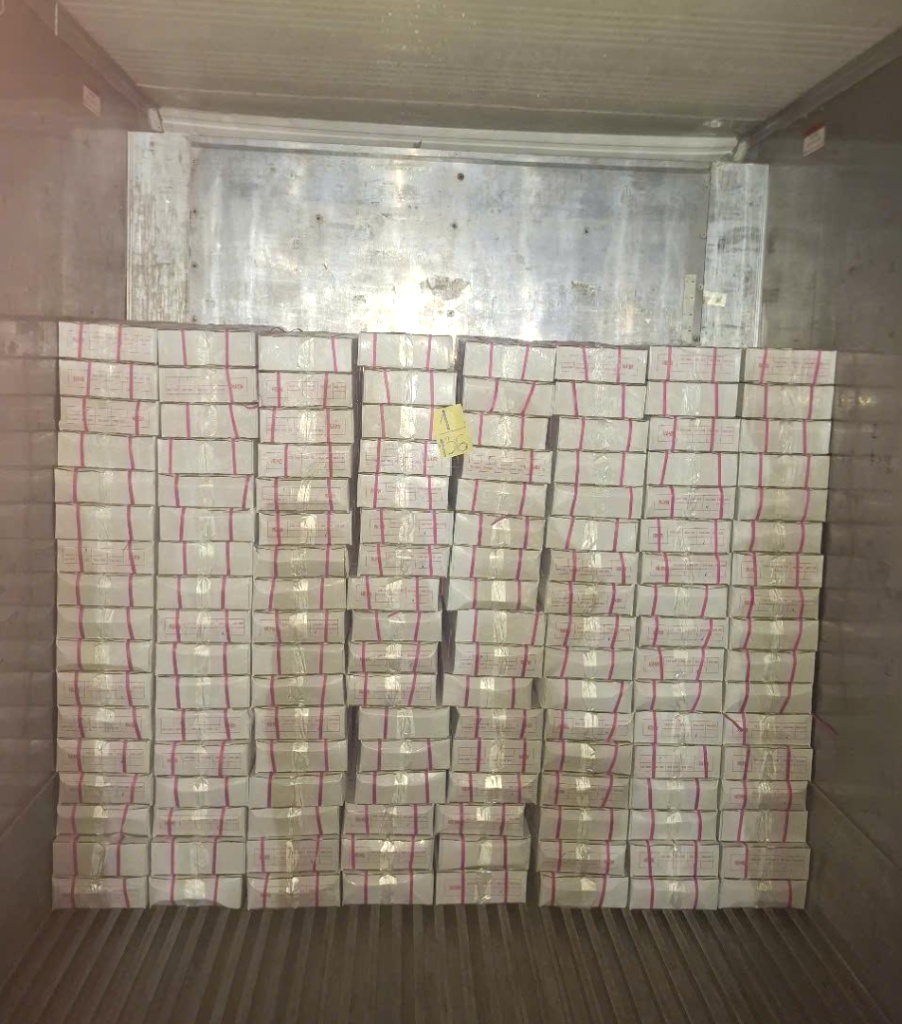
To ensure uniform cold airflow and maintain a stable, optimal temperature (typically -15°C or lower), cargo stacking within the container adheres to the following principles:
- Cartons are stacked tightly and squarely to maximize space utilization without exceeding the reefer container's "Red Line" limit.
- The number of packages per row and column is recorded and clearly marked with sequence numbers (e.g., Row 1, Row 20...) for cross-referencing with the packing list.
5. Container Loading and Sealing Completed
Once the container is loaded to its specified payload capacity (utilizing the maximum design capacity of a 40ft refrigerated container), the doors are securely closed.
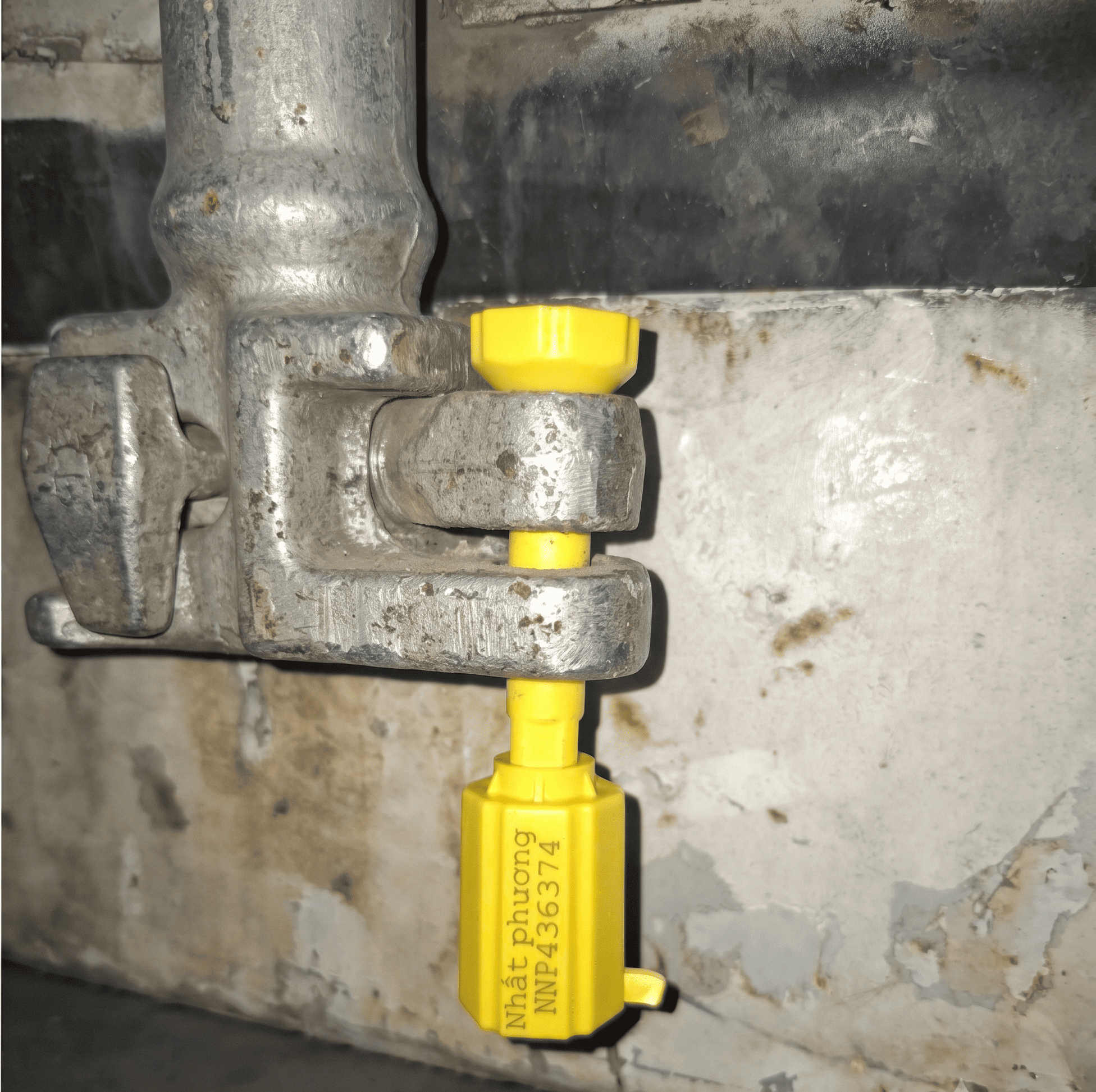
- The yard inspection team conducts a final check of the technical specifications displayed on the container and verifies the integrity of the door seals.
- A customs seal is then applied to ensure absolute cargo security, preparing the unit for transport by sea or road to the destination country.
Conclusion: Through a closed-loop operational process, optimized technology, and rigorous human oversight, our fish fillet products retain their full freshness and nutritional value by the time they reach consumers worldwide. We take pride in being a trusted, high-quality, and sustainable supply partner for our customers!
To receive a quotation and detailed information regarding product specifications, please contact our Export Sales Department via the "Contact" section on the website or hotline below.
OCEAN COMPANY LIMITED
Address: 159 Vo Van Tan Street, Xuan Hoa Ward, Ho Chi Minh City
Email: sale@oceancom.vn
Hotline: +84 876 775 328
main.comment_read_more